Restoring What Belongs Here.
We don't measure success in trees planted. We measure it in ecosystems rebuilt, where native flora and fauna can thrive on their own terms.
Ecology First. Always.
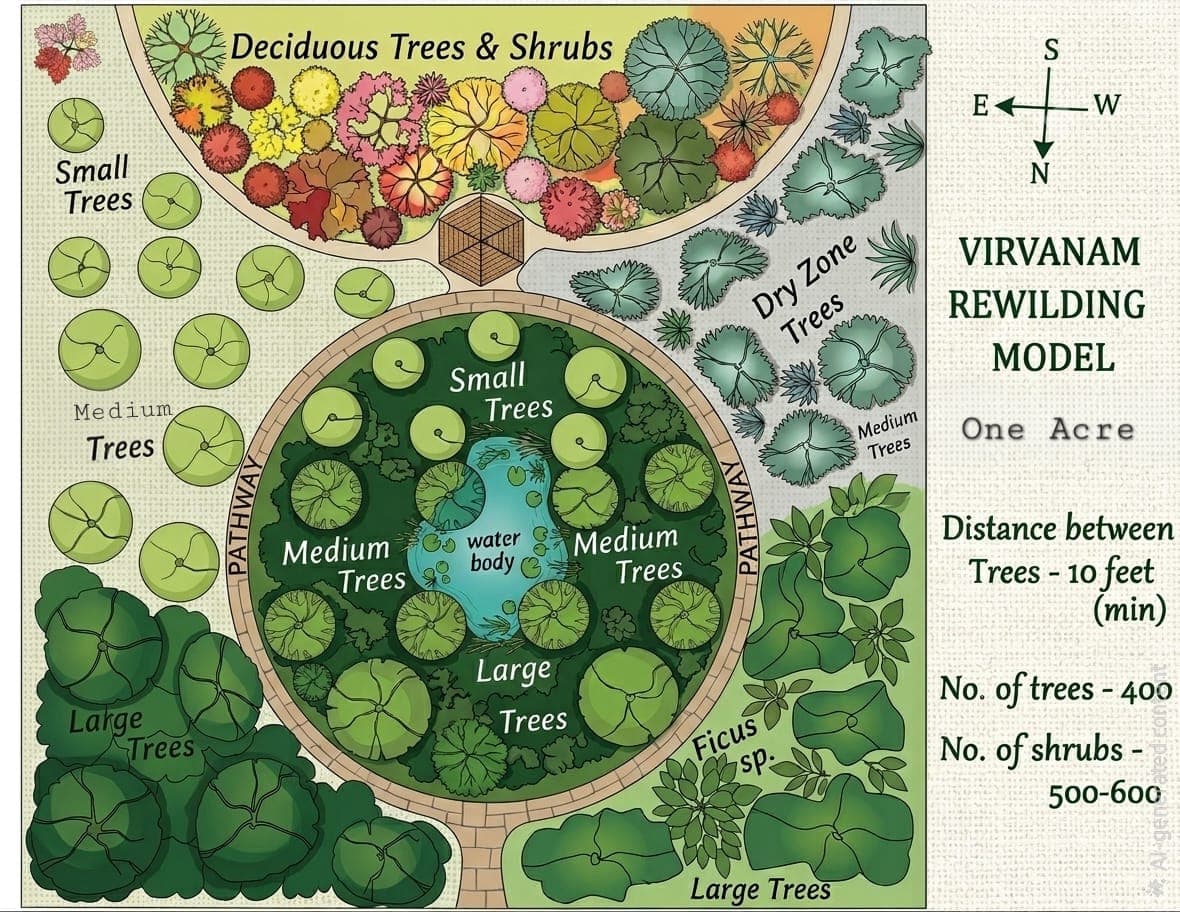
Most afforestation efforts focus on density: how many trees can fit in how much space. We focus on something harder to measure and far more important: ecological function. Our rewilding model selects 79 carefully chosen endemic trees, shrubs, and flowering plants, each one picked for the role it plays in the ecosystem, not simply to add green cover.
Biodiversity Depends on Specificity, Not Scale.
A landscape with a thousand trees of the wrong species supports almost nothing. A thoughtfully restored plot with the right native mix can sustain dozens of species, including many whose populations have quietly been disappearing for decades.
Our objective is not to make the landscape greener, but to create a self-sustaining, biodiverse ecosystem where native flora and fauna can thrive naturally, and for generations.
Not Just Greener. Alive Again.
Unlike plantation models that maximise vegetation cover, our approach restores the ecological relationships between species: the pollinators, the host plants, the soil microbes, the predators. Many butterfly species, for instance, can only lay their eggs on particular host plants. Remove that plant, and the butterfly vanishes. Restore it, and the butterfly returns. These cascading relationships are what make an ecosystem whole.
Looking for indigenous tree saplings?
We work exclusively with native, endemic species. If you are restoring land or starting your own rewilding project, get in touch: we can help you source the right saplings for your ecosystem.